Want to be in the loop?
subscribe to
our notification
Business News
FOREIGN RESIDENTS START TO EYE PROPERTY
"For foreigners like me, to own residential property in Viet Nam was extremely difficult, since we were required to meet strict requirements," Mark said.
"For instance, the law required that we either must have a permanent resident card for at least one year, or make contributions to Viet Nam and be awarded with a decoration or medal from the country's President, or make a special contribution to the country as recognised in a decision of the Prime Minister," he said.
"Also, it required that we must work in the economic sector with a university degree or higher qualification, or be someone with special knowledge or skills for which Viet Nam has a demand. Or you must marry a Vietnamese citizen," he added.
"Even if we met the requirements, we still had to complete many complicated administrative procedures before being allowed to buy a house. Because of this, in spite of making several efforts, I could not buy a house," Cameron said.
"However, the revised Housing Law will enable me to realise my dream of owning a house here," he said.
The new law states that all foreigners who have been granted a visa to Viet Nam are allowed to buy property in the country.
All foreigners will also be allowed to buy any kind of property, whether apartment or house, but with the provision that such property is under commercial housing development programmes.
More importantly, there will be no limit on the number of houses that a foreign can buy, but the total number of units owned by foreigners must not exceed 30 per cent of the total units in one building, or not exceed 250 houses in one particular administrative area.
Analysts say the new law would help the property sector, an area that has been underperforming since 2008, when selling prices plunged by 50 to 70 per cent.
Nguyen Tran Nam, former Minister of Construction, said that allowing individual foreigners to buy houses in the country would give the real estate market a much-needed boost.
The chairman of HCM City Real Estate Association (HREA), Le Hoang Chau, said the new housing law that allowed foreigners to buy residential property in the country would create an impetus for the domestic real estate market not only to grow but also to integrate into the world market.
Chau said the policy would increase national total assets, providing more conditions for other sectors to develop and therefore create more employment for local workers.
The new housing law is expected to "stir up" the domestic real estate market since many foreigners living in Viet Nam want to own a house here.
According to HREA's statistics, which are not yet complete, the city now has more than 80,000 Koreans, 7,600 Japanese, 1,200 Germans, 6,000 Filipinos and many (an undetermined number) Chinese, most of them residing permanently here.
Hoang Anh Tuan, general director of the Tac Dat Tac Vang Real Estate Company, said that Binh Duong Province also had dozens of thousands of foreign experts working in local industrial parks, health care and education establishments.
"To fully exploit this opportunity, many real estate investors have already outlined new business plans that have been designated in ways that can attract many foreigners to buy houses," Chau of HREA said.
Analysts said that many real estate developers had prepared high-end properties for overseas customers.
In Ha Noi and HCM City, many real estate developers have allowed foreigners and overseas Vietnamese to register to buy houses at their projects. Some of them have also advertised their housing projects abroad.
The Global Petroleum Investment Corporation, for example, announced that it would set aside part of its Trang An luxury apartment project to sell to foreign customers.
Company director Nguyen Quoc Hiep said foreigners and overseas Vietnamese represented potential customers who could encourage the recovery of the real estate market.
Tuan of Tac Dat Tac Vang also said his company had worked with Becamex to invest in an urban area that specialises in building homes for foreigners.
Vu Cuong Quyet, general director of the Dat Xanh Mien Bac Real Estate Company, said that many foreigners had already registered to buy apartments prior to the Housing Law taking effect, and were only waiting to complete necessary procedures.
Source: VIR
Related News

MEMBER CORNER / PROMOTIONS
KNIC EXCLUSIVE GATHERING & NETWORKING 2026: A NEW MEETING POINT FOR INDUSTRIAL INVESTMENT IN HANOI
On October 2, 2026, KN Industrial City (KNIC) will host KNIC Exclusive Gathering & Networking 2026 at the National Innovation Center (NIC) in Hanoi. Building on a series of business networking and investment promotion activities in Ho Chi Minh City and Dong Nai, the event marks a new opportunity for KNIC to connect with businesses, investors, and partners in Northern Vietnam.
MEMBER CORNER / PROMOTIONS
KNIC ENGAGES WITH GOVERNMENT AND HIGH-TECH BUSINESS COMMUNITIES IN CHINA
From Beijing to Shandong, KN Holdings and KN Industrial City are continuing to expand their engagement with government authorities, trade promotion organizations, and high-tech business communities in China. In Beijing, the delegation met with the Center for International Economic and Technological Cooperation under the Ministry of Industry and Information Technology (MIIT), exchanging perspectives on industrial and technology cooperation between the two markets.

VIETNAM ECONOMY INVESTMENT
VIETNAM’S TRADE TOPS $825 BILLION BY MID-SEPTEMBER
Figures released on September 21 showed goods trade reached nearly $55 billion in the first 15 days of September alone, bringing cumulative turnover since the beginning of the year to more than $825 billion. The strong growth reflects robust trade flows, with demand for consumer goods and production inputs remaining high.

TECHNOLOGY
VIỆT NAM'S BUSINESSES MOVE TOWARDS AI AGENTS
Việt Nam’s AI landscape is entering a new phase as businesses move beyond generative AI (GenAI) tools designed to assist human users towards autonomous AI, agentic AI and AI agents that can take action with limited supervision, experts have said. The shift comes as Việt Nam seeks to accelerate science and technology, innovation and digital transformation under Politburo Resolution 57-NQ/TW, issued on December 22, 2024.
GARMENT / TEXTILE
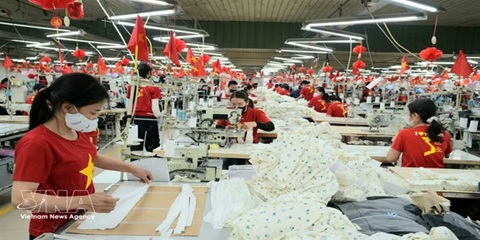
VIỆT NAM TARGETS $48 BILLION IN TEXTILE-GARMENT EXPORTS
Việt Nam’s textile and garment industry is facing both opportunities and challenges amid complex and unpredictable developments in the global market, prompting businesses to improve growth quality, optimise production costs and enhance adaptability in pursuit of an export turnover of about $48 billion this year. The target is considered an important milestone that requires concerted efforts from management agencies and the business community.
INFRASTRUCTURE / CONSTRUCTION / LOGISTIC / PORT
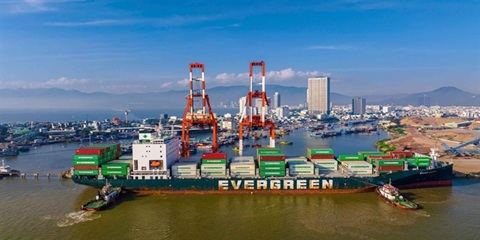
CUTTING LOGISTICS COSTS KEY TO BOOSTING EXPORTS
Reducing costs has become an increasingly urgent priority for import-export activities, particularly logistics costs, a conference in Hà Nội was told on Tuesday. According to Deputy General Director of the Ministry of Industry and Trade's Agency for Foreign Trade, Trần Thanh Hải, import-export activities has remained a bright spot for the economy in recent years, playing an important role and helping drive macroeconomic growth.
Events Sponsors






















